Realtime blog statisticsRealtime blog statistics
Scanning..

Gush Etzion Junction: The deadly roundabout

Soldier at Gush Etzion Junction
One roundabout near Jerusalem has become a symbol of violence between Israelis and Palestinians. The Gush Etzion Junction has been the site of a dozen deadly incidents in recent months.
As we turned on to Route 60, from Hebron towards Jerusalem, we find Israeli police blocking the way. We've just interviewed the father of a Palestinian teenager, shot dead last year after stabbing an Israeli soldier at a road junction.
Now another Palestinian man has been killed while allegedly carrying out an attack at the very same spot, up ahead.
The Gush Etzion Junction is a roundabout where Israelis and Palestinians constantly cross paths. And recently it has become one of the most dangerous places in the West Bank. There have been a dozen deadly incidents since October.
"So, this junction - every stone, every flag, every bus stop - has seen a terror attack," says Daniel Hanson, a British-Israeli security officer for Jewish settlements nearby. "Unfortunately, where we're standing we lost two civilians in two separate attacks."
Map shoeing location of Gush Etzion junction and settlements
He shows me mounds of stones topped with Israeli flags where a female student and a reservist soldier were killed.
The Rami Levi supermarket next to the roundabout bustles with Israeli shoppers pushing trolleys. Most live in the Gush Etzion bloc of more than 20 settlements. Many now carry guns - either M16 rifles like Daniel - or small handguns like the one he tells me his wife keeps in her handbag to protect herself.
Israel's military occupation of the West Bank and the expansion of settlements are often cited as reasons for Palestinian anger. But Daniel believes incitement is driving the upsurge in attacks.
"On Palestinian television we see videos and cartoons calling to go out and become a shaheed, a martyr, 'Go out, stab a Jew, stab an Israeli'," he says. "They want to glorify their name, glorify Islam."
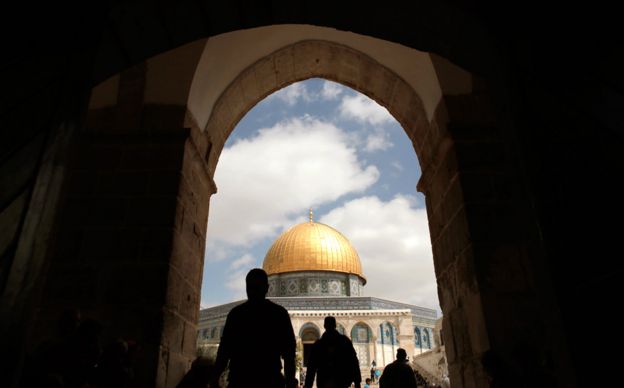
Al-Aqsa mosque JerusalemImage copyrightGetty Images
The current escalation was triggered, at least in part, by Palestinian fears about the al-Aqsa Mosque compound in Jerusalem's Old City. The site is holy to Muslims, who call it the Noble Sanctuary, and Jews, who call it Temple Mount.
As Jews visited during religious holidays, there were reports - ­ officially denied ­- that Israel had plans to change a rule forbidding non-Muslims from praying there.
But in Hebron, the father of the 19-year-old who carried out a stabbing at the Gush Etzion Junction says his son's motivations weren't simply religious. He had seen young Palestinian attackers and alleged attackers killed by the Israeli army and got drawn into the cycle of violence.
"The situation in Hebron was very difficult at that time," Nadi Abu Shkheidem tells me. "Izz al-Din was always following events on Facebook."
"Many were shot dead at the checkpoints, including girls. This heated the anger of our young men. They went to avenge them - before al-Aqsa, before the land, before everything."

Find out more

  • Watch Yolande Knell's documentary Death at the Junction online - it was first broadcast on Our World on BBC World TV
  • From Our Own Correspondent has insight and analysis from BBC journalists, correspondents and writers from around the world
  • Listen on iPlayer, get the podcast or listen on the BBC World Service or on Radio 4 on Saturdays at 11:30

At Alon Shvut, a settlement by the junction, the sons of Yaakov Don lead mourning prayers at their synagogue. The teacher, known for his broad smile, was murdered last November.
A Palestinian gunman opened fire at cars heading to the roundabout. He also shot dead an American student and a Palestinian driver.
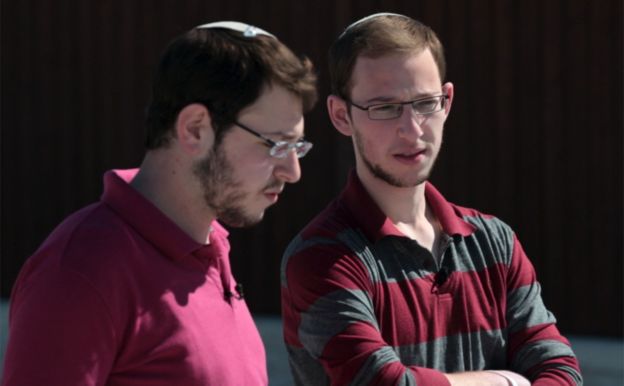
Two Don brothers - Maor Don on right
Image captionMaor Don (right) with his brother
"He didn't even regret killing the Palestinian," says Maor Don. "These people are so full of hate. They just want to kill and don't want any peace at all."
Despite their terrible experience, the Don family is determined to continue living in Gush Etzion. "It's important to stay," Maor says. "Historically this is a very important place for Jewish people."
In the early 20th Century, Jews bought land in this area. But in fighting with Arab armies in 1948, they were forced out or killed. After Israel captured the West Bank in the 1967 war, Jews returned.
Settlements are seen as illegal under international law but Israel disagrees.
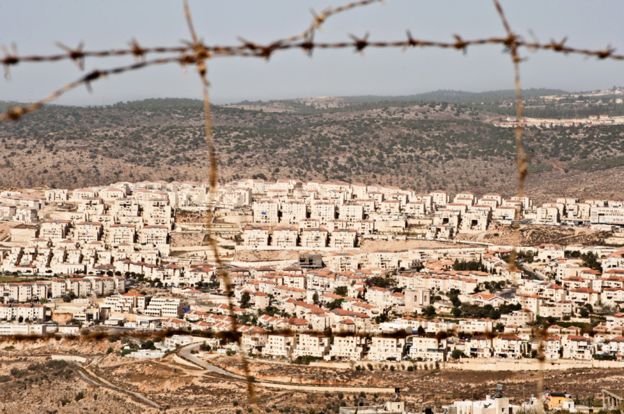
Betar Illit area of Gush Etzion settlementImage copyrightAlamy
Now Gush Etzion is 30 times larger than it was historically. Areas of Palestinian land have been added to it causing deep resentment. But at the same time, 4,500 Palestinians work in Gush Etzion. It's an uneasy economic relationship that many Israelis see as a model for peaceful co-existence.
In the Palestinian village of Khirbet Zkarya, surrounded by settlements, there's a different perspective.
"It's difficult," says Mohammed Saad, a farmer, as he prunes his grape vines. "Israel forbids us from building and we've lost some land. Our harvests aren't enough, so we must work in the settlements to raise our children."
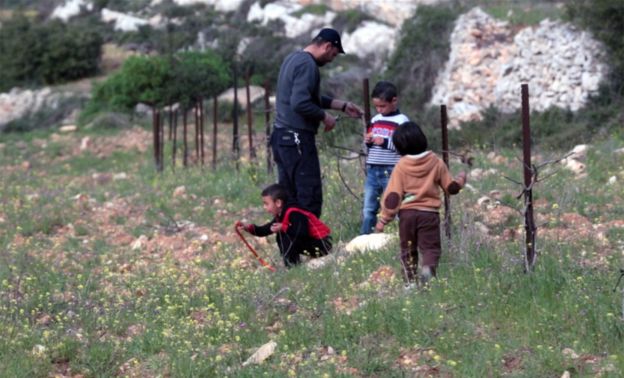
Mohammed Saad with his children
Since the recent unrest, new security restrictions at the Gush Etzion Junction are having an impact here. "We're now isolated," Mohammed says. "There's a new checkpoint and only people with an ID for Khirbet Zkarya can access it."
At the roundabout local settlers are protected by heavily armed soldiers. For them, this site is a symbol of the dangers they face every day.
For Palestinians it represents Israel's occupation. And I expect more bad news from the Gush Etzion Junction.
With no hope of a political solution in sight, it offers a worrying glimpse of a future where both sides in this conflict continue to live with simmering tensions and eruptions of violence.

More from the Magazine
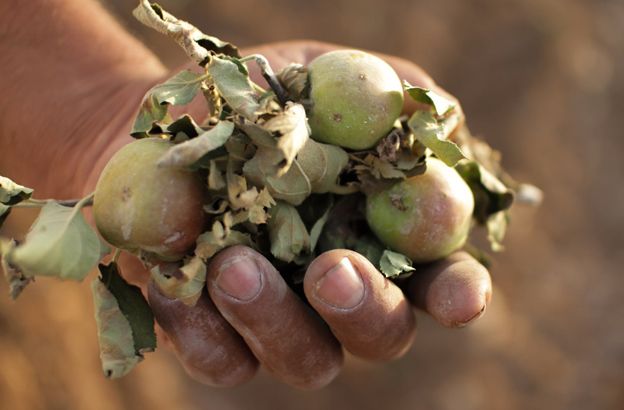
A hand holding apples
In June 2014, Daniel Silas Adamson wrote about a Palestinian Christian family holding on to the farm it had owned for 98 years in the West Bank.
The Christian family refusing to give up its Bethlehem hill farm

Subscribe to the BBC News Magazine's email newsletter to get articles sent to your inbox.

Should you be allowed to use a phone in the cinema?

A young woman uses a phone in a cinema auditoriumImage copyrightAlamy
A proposal by a US cinema chain to let customers use their phones during some film screenings unleashed such a powerful blast of outrage that the company quickly reversed it. But is allowing texting in cinemas really such terrible idea?
Adam Aron, head of AMC Entertainment, only had to float the idea of making some cinemas more "texting friendly", and film fans all over the world reacted furiously.
"Worst idea ever," was the conclusion of many people on social media. "You're basically pandering to rude people just to make money," said one person on Twitter. "I will not pay to have people texting all around me."
Just two days after Aron's interview was published, the company was forced to withdraw the idea.
"There will be no texting allowed in any of the auditoriums at AMC Theatres," it said in a statement. "Not today, not tomorrow and not in the foreseeable future."
Hollywood film blogger Alex Billington is one of many who rejoiced at AMC's rapid backpedalling."Texting in the theatre completely ruins the movie," he says. "This is something we have to fight against on a social and cultural level."
In 2014, an argument between two men over texting in a cinema in Florida ended in a fatal shooting. While that was an extreme case, most people would agree that glowing phone screens and fingers tapping can be infuriating.
"The only senses you have in the cinema are vision and hearing," says Ann Hornaday, chief film critic at the Washington Post. "Anything that gets in the way of that sensory experience is rightfully considered an inappropriate distraction.
"When we go to the cinema, we all enter into a contract - so we do feel a little betrayed when someone behaves badly."
At the same time, she does understand the challenge cinemas face to attract younger viewers.
People use their phones in a cinema auditoriumImage copyrightAlamy
"We need to reshape our product in some concrete ways so that millennials go to movie theatres with the same degree of intensity as baby boomers went to movie theaters throughout their lives," Aron said in his interview with Variety magazine.
"When you tell a 22-year-old to turn off the phone, don't ruin the movie, they hear please cut off your left arm above the elbow."
A survey in 2012 found that a majority of 18-to-34-year-olds believed using social media while watching a movie would add to their experience.
"Young people place a high value on being 'always on'," says sociologist Julie Albright. "Millennials have become very good at multi-tasking so they think nothing of looking at their phone while doing other sorts of things including consuming films and television and other media."
But Chuck Tryon, a lecturer and author of On Demand Culture: Digital Delivery and the Future of Movies, points out that while some young people may find it hard to put their telephones down, this is not universally the case.
A man checks his cell phone as people walk past along a street in New York in 2014Image copyrightGetty Images
"It's a horrible reduction of a whole generation of people," he says. "As a film professor I know many millennials who want this non-distracted movie experience.
"Some of the worst offenders in terms of texting in movies are often slightly older - maybe someone who has left their children with a babysitter and is checking up on them."
But he too realises cinema chains are "really searching for options" to increase business.
Cinema attendance in the US and Canada has been generally declining for the last decade, while films are being released on DVD or streaming services more quickly.
Many cinema chains are already offering more comfortable seats, enticing snacks and alcoholic drinks. Allowing phones would be one more step towards making the cinema experience more like what viewers can get at home.
A place setting and menus are seen at a table in the Nitehawk Cinema in 2013 in the Williamsburgh neighborhood of Brooklyn in New York.Image copyrightGetty Images
Image captionSome cinemas are offering meals served to customers in their seats
Ann Hornaday says making particular areas or auditoriums "texting friendly" could benefit other audience members who did not want to sit next to someone with their phone on. "Maybe it would be better for people like me - it would quarantine the texters," she says.
But Dana Stevens, a film critic for Slate, is not convinced. "I guess if all the rude texters don't mind being cordoned off into a single, awful screening room full of flashing, beeping phones that could work," she says. "But I don't think dividing audiences into two camps… is the way to keep theatrical movie-going alive."
Much of the frustration of film fans comes from the apparent reluctance of cinema staff to enforce cinema rules, enabling some chains to use their strict no-texting policies as a marketing tool. In 2011 Alamo Drafthouse, a cinema chain based in Austin, Texas, posted a YouTube video of a voicemail message left by a seething customer after she was kicked out for using her phone. The video went viral and Alamo Drafthouse went on to use it as a public service announcement before screenings.
The dilemma remains for other chains still struggling to attract new audiences while keeping core customers happy. The latest outcry over texting in cinemas will deter them from considering this option, says Chuck Tryon.
"The entire movie Twittersphere exploded," he says. "I think the cinema chains have been sent a message. I do not see any change happening any time soon."
Subscribe to the BBC News Magazine's email newsletter to get articles sent to your inbox.

The town of Port Arthur wants to forget killer Martin Bryant

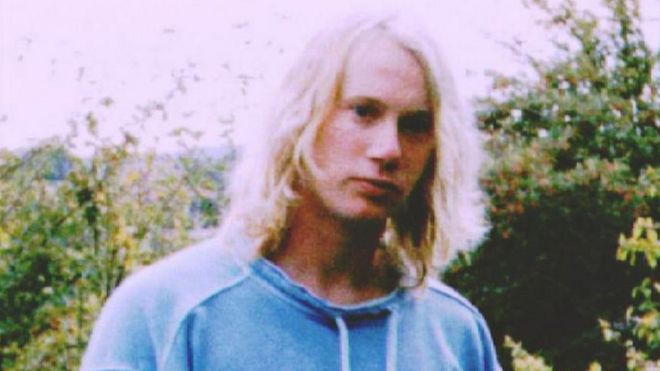
File photo of mass killer Martin BryantImage copyrightAP
Image captionMass murderer Martin Bryant killed 35 people and injured 23 during Australia's deadliest shooting
Twenty years ago a young, blonde-haired man who drove a yellow Volvo with a surfboard strapped to the top killed 35 people at Port Arthur, a historic tourist town in Tasmania.
It was the worst mass shooting in Australia's history and for many years it has defined the town, although among locals it is a sensitive, almost taboo topic. The gunman, Martin Bryant, is one of the country's most notorious villains, but his name is rarely spoken in Port Arthur.
So people were surprised and dismayed in March this year when an actor drove a yellow Volvo around the massacre site at the behest of a major Australian television network.
"To hire a yellow Volvo with a surfboard on the roof and a have a blonde, long-haired man drive around the site so they could film it was an extraordinarily horrible thing to do," said local mayor Roseanne Heyward.
The media rehashing of Australia's Port Arthur shooting massacre in the lead-up to Thursday's 20th anniversary has been upsetting for the community, leaving many people keen for the day to be done.
Since March there has been an outpouring of reports on the massacre, boasting of never-before-seen material, first-time accounts, graphic retellings and television re-enactments.
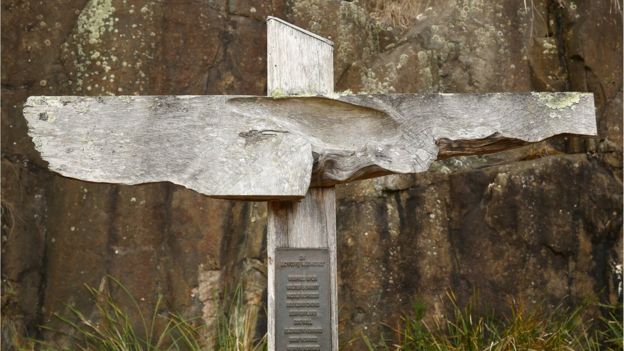
Memorial cross at Port ArthurImage copyrightGetty Images
Image captionA simple wooden cross bearing the names of victims is the main memorial at the Port Arthur site
Capping that was news this week of a graphic movie of the massacre, playing to conspiracy theories Bryant wasn't the killer, that is due to start filming this year.
Stephen Large is chief executive of the Port Arthur Historic Site, the former penal colony and world heritage-listed site where Bryant shot most of his victims.
Mr Large said the television re-enactments and rehashing of the massacre were disappointing, particularly the Volvo drive-by re-creation.
"That rocked quite a few people here and certainly upset a lot of people in the local community, and I'm sure a lot of people that were directly affected by 1996," Mr Large said, adding that any requests to film a movie at the site would be assessed on their merits.

'How could you refuse?'

Prime Minister Malcolm Turnbull heads the dignitaries attending a Thursday ceremony marking 20 years since the massacre.
The two-hour ceremony, the first at the site since the 10th anniversary, will be broadcast live on two of the country's television networks.
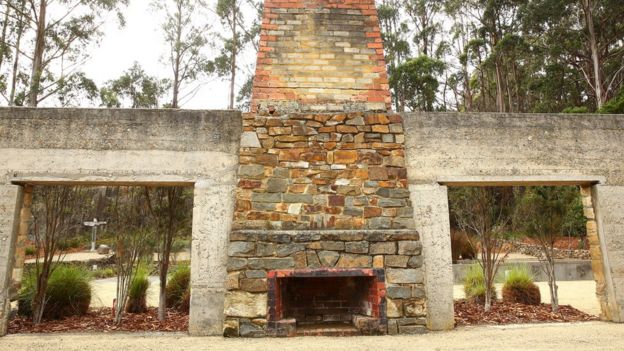
The remains of the Broad Arrow CafeImage copyrightGetty Images
Image captionThe remains of the Broad Arrow Cafe and gift shop, where Bryant killed 20 people
Former prime minister John Howard, who moved swiftly and decisively to ban the possession, use and importation of semi-automatic and automatic rifles following the shootings, will also be among those at the ceremony.
Despite the reluctance of some locals to mark the tragedy, many victims' relatives were determined to hold a milestone ceremony. Some survivors will return to the site for the first time since that Sunday in 1996.
Mayor Heyward said compassion for these people made the service a necessity. "How could you refuse them?" she asked.
"But we have moved on, we'll never forget, but we have to get up every morning and get on with our lives and that is what this community has done."

Better forgotten

Martin Bryant, now aged 48, is serving 35 consecutive life sentences.
Many people object even to the use of Bryant's name, with local media often bombarded with complaints if he is mentioned in reports.
Tasmania Times news website editor Lindsay Tuffin said Tasmanians wanted Bryant excised from memory.
"There is no doubt that they do not want to even ponder it," he said. "They just wish he never existed."
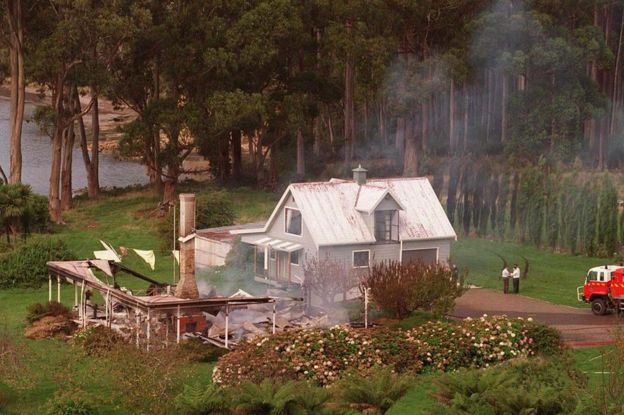
Photo dated 29 April 1996 showing the remains of the guesthouse where Martin Bryant shot his first victimsImage copyrightAFP/Getty Images
Image captionBryant's first victims were shot at a guesthouse not far from the remains of the Port Arthur convict settlement
The feeling is so strong that visitors to the Port Arthur Historic Site are usually urged not to ask questions about the massacre.
"Rather than ask a guide, please read the plaque at the Memorial Garden or pick up a brochure at the Visitor Centre," an instruction reads.
Hobart Mercury editor Matt Deighton said local media approached the topic in a completely different way to mainland publications.
"It's as sensitive an issue as I've experienced in 26 years of journalism," he said.
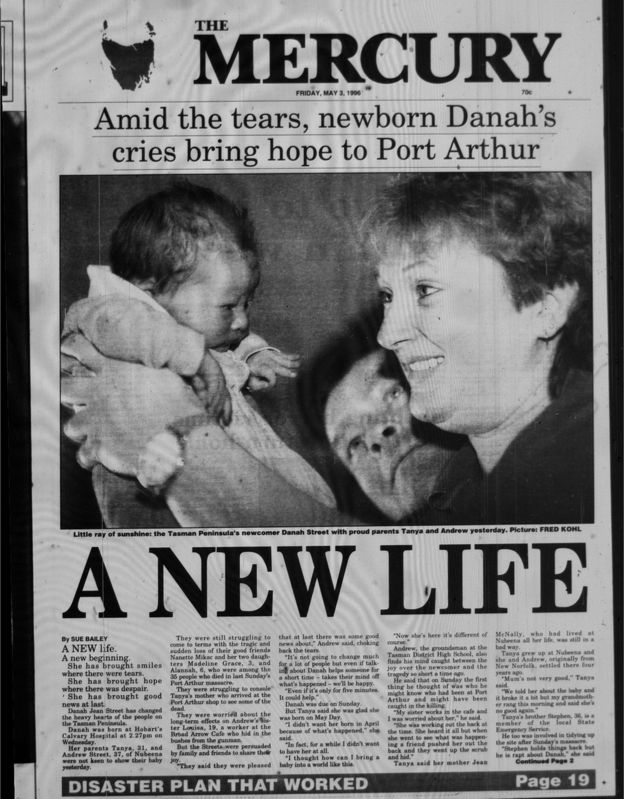
Hobart Mercury front page from 1996 showing newborn baby from Port ArthurImage copyrightHobart Mercury
Image captionJust days after the Port Arthur massacre occurred, the Hobart Mercury newspaper was already focusing on stories of renewal
"Our coverage will be subtle and respectful, focusing on the anniversary and how the community has tried, at varying levels of success, to move on."
Thursday's ceremony may be unsettling for those who would rather forget the senseless violence in 1996.
But Stephen Large from the Port Arthur Historic Site is hopeful that it will be a positive experience for victims and the community.
"There are some people coming who we know haven't been back to the site for 20 years so it will be particularly poignant for them and we hope it's worthwhile for them," Mr Large said.
Older Posts
© Free Template Brother Danieli
Code Nirvana
Back To Top